Sunday, 1 May 2016

Happy Birthday to Jean

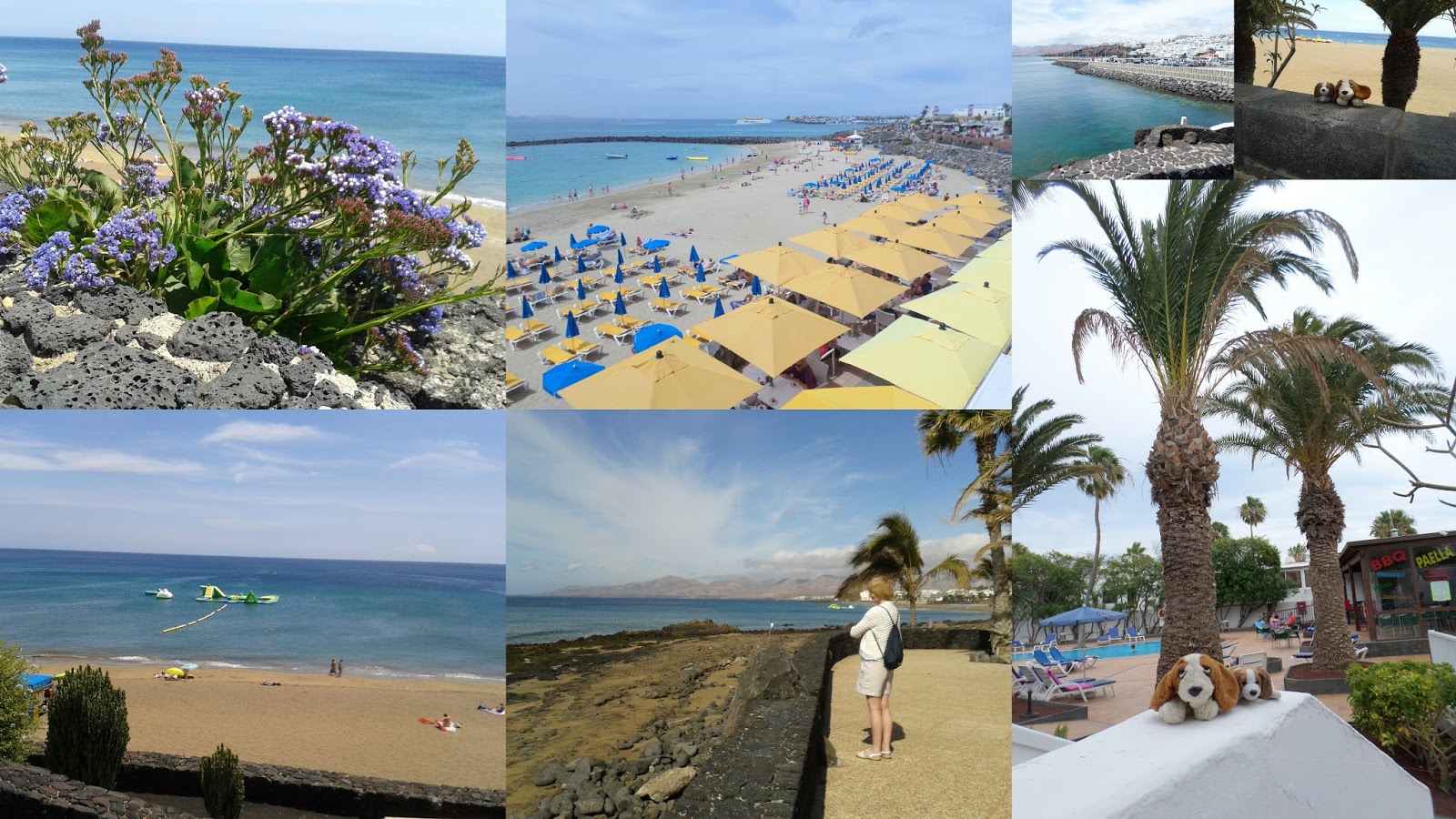
Yep that time of year again, Sis’s birthday, so up stix n off for a short break to Puerto del Carmen Lanzarote.

Situated just 79 miles off the coast of Africa, Lanzarote is the most easterly of the Canary Islands. The island is 37 miles (60km) long and 12 miles (20 km) wide, making it the fourth largest island in the Canaries. As with the other Canary Islands, Lanzarote is Volcanic in origin. Due to the recent eruptions during the 18th and 19th Centuries, many parts of Lanzarote appear to be from another world, often described as 'lunar'. The dry climate and lack of erosion means that the Volcanic Landscape appears much as it did just after the eruptions. Much of the Island has been declared a UNESCO Biosphere Reserve.


Puerto del Carmen was originally a small fishing village, and the old harbour is still a delightful place. Although the resort has grown over the last twenty years — it now stretches along the whole 6 kilometres of golden sandy beaches — the town has been saved from the high-rise buildings that blight so many other destinations due to the strict planning restrictions.


We stayed in a delightful, small but perfectly formed, poolside complex, Apartmentos Flamingo – complete with palm trees n parquet’s. There are many restaurants nearby but special mention for Capri does veggie dishes to die for (and meat/fish as well).

A visit to Timanfaya National Park is a must, set on the most easterly Canary Island, Lanzarote. It can be found to the west of the island, nearby the town of Yaiza. Timanfaya is also known as the fire mountains and has it's own logo which is El Diablo, translated as the devil for obvious reasons. 

The fire mountains were created between 1730 and 1736. Over 100 volcanoes rose in the area and devastated the island. The last eruption occurred in 1827.  Temperatures just feet below the surface still range from 400°C to 600°C. Inside there was a huge hole in the middle with a huge grill over the top, a volcanic barbecue. Next to it is the El Diablo restaurant which serves up canarian food that has been cooked over the volcanic heat!


when lichen is dropped into a fissure
it bursts into flames


water instantly turns

to pressurised steam


pebbles from surface hot spots
are too hot to handle
the restaurant BBQ cooks
over free heat


Along the way there are camel rides. Rather than sit on the camels back, the camel has a seat either side of its humps. The camels will take you up a volcano and back down again.


There is also a museum of farming with camels -


In spite of the dry and arid conditions there is much colour to be had on the island -


and beaches

and vineyards. Vines grow individually, behind windbreaks made from lava rock, in indents made in the lava ash. This protects them from the wind, helps keep in moisture and adds to the flavour of the wine - 


Cheers!

Saturday, 23 April 2016

Cider with Rosie Country

A beautiful day for a walk through the Slad Valley near Stroud, Laurie Lee country, trekking Frith Wood. Carpets of wild garlic, bluebells, rare woodland violets, blackthorn blossom and the most amazingly picturesque countryside with panoramas to match.


Frith Wood is a nature reserve and an ancient beech wood that straddles the ridge overlooking the Painswick and Slad Valley's. There are a number of footpaths that go through the reserve. Rare plants also include wood barley, white helleborine and yellow bird's nest. The nature reserve is part of a larger site of special scientific interest (SSSI) that includes Bull's Cross and Juniper Hill.


Monday, 18 April 2016

Croome and Bylane

Earl's Croome is a village and civil parish near the Malvern Hills, Worcestershire. The village is mentioned in the Doomsday Book circa 1086, as Crumba. The first part of its name is derived from the Earl of Coventry who had Earl's Croome Court as a residence opposite the village church. It contains some gems including:

Bylane

A two acre herbaceous garden, paddock with wildlife pond, vegetable garden, and chickens, wood with mature trees and bluebells to the rear of Croome Garden Centre.  Lovingly developed by the owners, converting an overgrown scrub-land over 20+ years. 


We have a blackbird who has adopted our garden but here 'Willy' Wagtail has taken on the mantle -


Croome Park and Manor

Croome Court is a mid 18th century Neo Palladian mansion surrounded by Croome Park which was Lancelot ‘Capability’ Brown’s masterful first commission, with commanding views over the Malverns. Croome Court was once home to the Earls of Coventry and is currently undergoing a significant repair programme.

Having undergone a number of incarnations, the foundations and core of Croome Court, including the central chimney stack structure, date back to the early 1640s. During the WW II it housed the Dutch royal family, who were escaping the Nazi occupation of Holland – also during the war the top secret base of RAF Defford occupied part of the Croome Court estate. The house was listed on 11 August 1952; it is currently Grade I listed. From 1979 to 1984 the hall was taken over by the International Society for Krishna Consciousness (Hare Krishna movement), who used it as their UK headquarters and a training college called Chaitanya College.


Croome Park has a man-made lake and river, statues, temples and other buildings with the Court as the central focus. The other buildings around the park include Gatehouses, a Grotto, a Church and buildings termed "eye-catchers". These are Pirton Tower, Panorama Tower, Dunstall Castle and Park Seat. They are set away from the core of the Park and are intended to draw the eye into the wider landscape.


St Mary Magdalene’s Church, perched commandingly on the hill, is a Grade I listed building and was built in 1763 by Capability Brown for the Earl of Coventry. A medieval church nearer the Court was demolished to make way for this church, the interior of which was designed by Robert Adam.


original bell mounts

Wednesday, 13 April 2016

Bluebells are Blue

Siccaridge wood is in the Frome Valley and is about half a mile west of Sapperton. It is adjacent to the Sapperton Valley and Daneway Banks nature reserves. This is semi-natural ancient woodland has been managed as coppice for hundreds of years and is situated next to the Thames and Severn Canal. Access to the reserve is either from the canal towpath or from the road to Daneway and Tunley.


The wood includes ash, silver birch and beech and there is a glade noted for its lily-of-the-valley. Uncommon species found in Siccaridge Wood include angular Solomon’s-seal, herb Paris and bird’s nest orchid. Bluebells carpet the woodland floor in spring. It was this display we had come to see and whilst there are carpets of indigenous single stalked bluebells emerging we were about two weeks early for the full display.


The reserve is part of the National Dormouse Monitoring Scheme, where monitoring takes place monthly. There are also huge wood ant nests throughout the woodland floor and the open rides attract silver washed fritillary and comma butterflies. 

Historical records have been traced to 1576. At that time it was called Sickeridge Coppice and it belonged to the lord of the manor, Bisley. The name Siccaridge comes from the old English sicor hyreg which means 'secure, safe ridge'. The Bathhurst Estate acquired the wood in 1861. 

The path runs picturesquely between the Frome and the disused Severn Thames Canal. The canal leaves with mixed feelings. Whilst there is a fascinating display where nature has reclaimed the canal, if restored it would make a wonderful rural addition to our canal system.


dismantled locks