Not the Dutch airline, rather –
Kempley
At the heart of the ‘Golden Triangle', Daffodil Trail,
Kempley is bordered by woodland walks through fields of wild native daffodils, wild garlic and wood annenomies.


Lindors
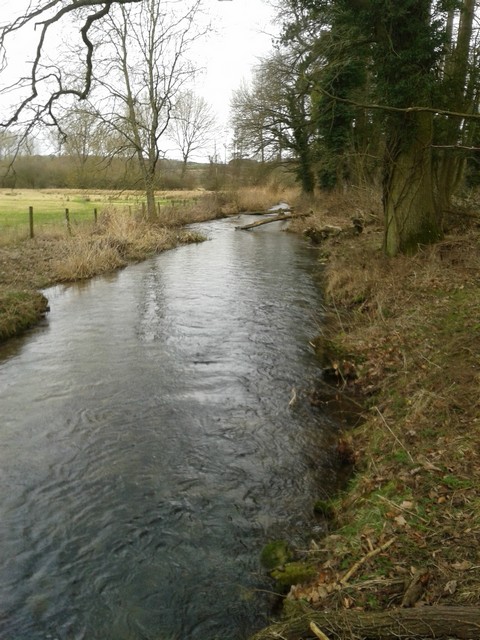
Built on the Mork Brook that flows into the River Wye the nine acre garden was originally set out in 1846.
Built on the Mork Brook that flows into the River Wye the nine acre garden was originally set out in 1846.

There are over 70 varieties of trees at Lindors the oldest is believed to be a Copper Beech, closely followed by a Black Mulberry. Both are nearly 120 years old. There is also Cedar of Lebanon, Red Cedar, a 48 mtr Giant Redwood and a cider orchard.
The grounds and surrounds also contain a number of water features.

Continuing on to Tintern with its magnificent abbey ruins, river vistas and unique 'out of print' bookshop.


Much Marcle
Small village, big church. St Bartholomew’s dates from the 13th century and is of considerable architectural interest. The Norman tub font is mid 12th century and is the sole remaining relic of the Norman Church which once stood on the site. The church is composed of a 13th century chancel and nave, with the addition of a small 14th century chapel and a very imposing central tower, added in the 15th century.


Inside the church are several beautifully carved tombs. The most imposing tombs are those of Sir John Kyrle and his wife Sybil, which is located upon a high plinth of black marble, surmounted by the alabaster effigies. and the quite extraordinary painted effigy of Walter de Helyon in the north aisle of the nave.


Also in the church is a small carving saved from the Cathederal in Ypres after it was bombed.


Of particular interest as my Grandfather, wounded and working for the Imperial War Graves Commission established and maintained a number of first world war graves cemetries around Ypres/Popperinge.


About three miles north-north west of the village, on the eastern face of Marcle Ridge, a massive landslip, estimated at 60,000 cubic metres, took place over three days starting on 17 February 1575. Named "The Wonder", it was so large that full-grown trees were carried down the slope onto an adjoining property.
Opposite the old church track lies the path to Hellens House, the ramshackle Jacobean Manor House, containing lands and a sculpture park. In 1096 the Manor was granted to the de Balun family who witnessed the signing of the Magna Carta by King John. Thereafter by marriage, deed and gift it passed through the powerful Mortimer family to the Lords Audleys by 1301, who were created Earls of Gloucester in 1337. Among Hellens’ attractions are the haunted rooms prepared for Mary Tudor and her tutor Fetherstone; the Stone Hall and its great fireplace bearing the Black Prince’s crest and the Minstrel Gallery. To the rear Hallwood woodland is a SSSI (a site of special scientific interest).


It's also been a great lambing seasons